Our Work / Water
Clean Water for All
Tackling arsenic contamination and delivering safe drinking water to rural communities in West Bengal
Sulabh International Social Service Organisation
Our Work / Water
Tackling arsenic contamination and delivering safe drinking water to rural communities in West Bengal
Sulabh International Social Service Organisation
The Challenge
Sulabh International in collaboration with 1001 Fontaines, France undertook a project to supply clean water to the rural communities in six blocks in the districts of 24 Parganas (South & North), Nadia, Murshidabad, West Medinipur, in the state of West Bengal.
In these areas, people are exposed to elevated levels of inorganic arsenic through drinking contaminated water, using contaminated water in food preparation and irrigation of food crops.
Long-term exposure to inorganic arsenic, mainly through drinking-water and food, can lead to chronic arsenic poisoning. Skin lesions and skin cancer are the most characteristic effects.
In order to meet the criteria for a safely managed drinking water service (SDG 6.1), people must use an improved source meeting three criteria:

Health Impact
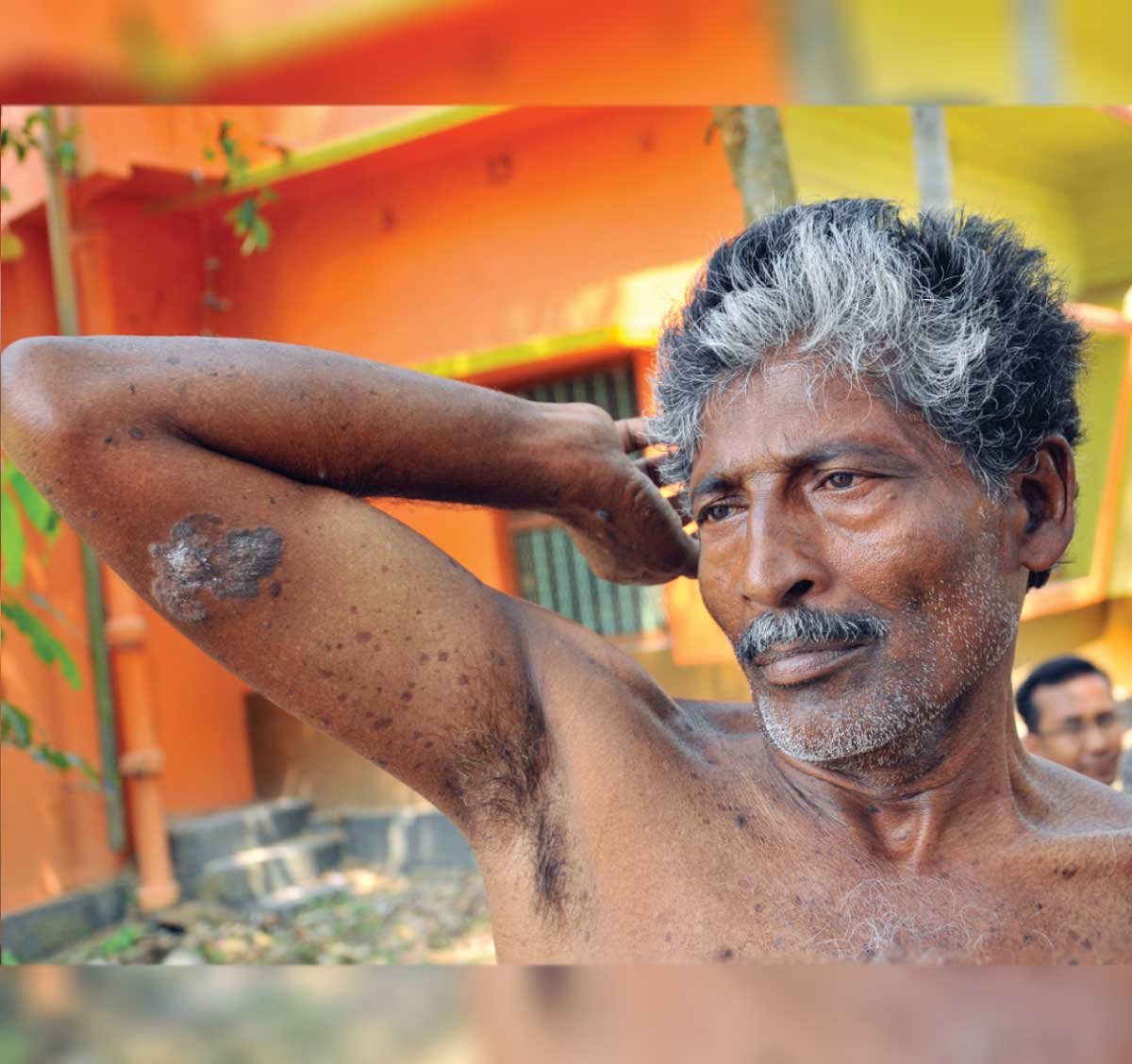


“Arsenic is a natural component of the earth’s crust and is widely distributed throughout the environment in the air, water and land. It is highly toxic in its inorganic form.”
— World Health Organisation (WHO)
The Scale
World Health Organisation study states that 100 million people around the world today are exposed to dangerously high levels of naturally-occurring groundwater arsenic in sedimentary aquifers.
In India, roughly 40 million people reside within the risk zone of arsenic contamination in states such as West Bengal, Bihar, Uttar Pradesh, Jharkhand, Assam, Manipur, Punjab, Haryana, Chhattisgarh and Karnataka.
As per government records, as many as 15,811 habitations in India are arsenic affected. Globally, 70 countries in the world are worst affected (source: KTH).
The Solution
The usual methods to get clean water adopt standard processes based on the extreme range of filtration using reverse osmosis (RO), adsorption, chemical treatment, or a combination of these.
Sulabh International in collaboration with 1001 Fontaines came up with a smart solution for the arsenic-affected areas in West Bengal. Due to good rainfall, the state has no dearth of perennial water bodies. Water is available from most of the large ponds, rivers and shallow wells. These water bodies, which are rain-fed, do not have the geogenic contamination.
A process was developed to produce drinking water of appropriate quality from the surface water, which is simpler, lower cost to construct and maintain, and requires a lower level of skillsets for operation and maintenance. The result was a grand success and became a model of community-managed drinking water plants. Some of them have become commercially successful to the extent that they have taken loans to expand their business.
Sulabh’s initiative has had a transformative outcome on people’s health. There has now been a considerable improvement in the health of the people affected by arsenic contamination.
Community Impact
Hydraulic and structural designs have been completed as per the instruction guidelines provided by IAES & PH to ensure the quality of the water produced. The capacity of the water treatment plant is 4,000 litres per day with 8 hours of operation time.
The water from the ponds, well or river is pumped into an overhead reservoir from where it is delivered into a flocculating tank where chemicals (alum and bleaching powder) are mixed with the water at the desired rate. The settled water is then passed through a slow sand filter and collected in a clear water reservoir, from where it is passed through activated carbon bed and fine membranes of varying sizes (60μ, 40μ, 10μ, 1μ). This removes the finest contaminants from the water, which is then treated with UV rays to make it totally bacteria-free. The resultant treated water is poured into 20-litre bottles and sealed for distribution.

Innovation
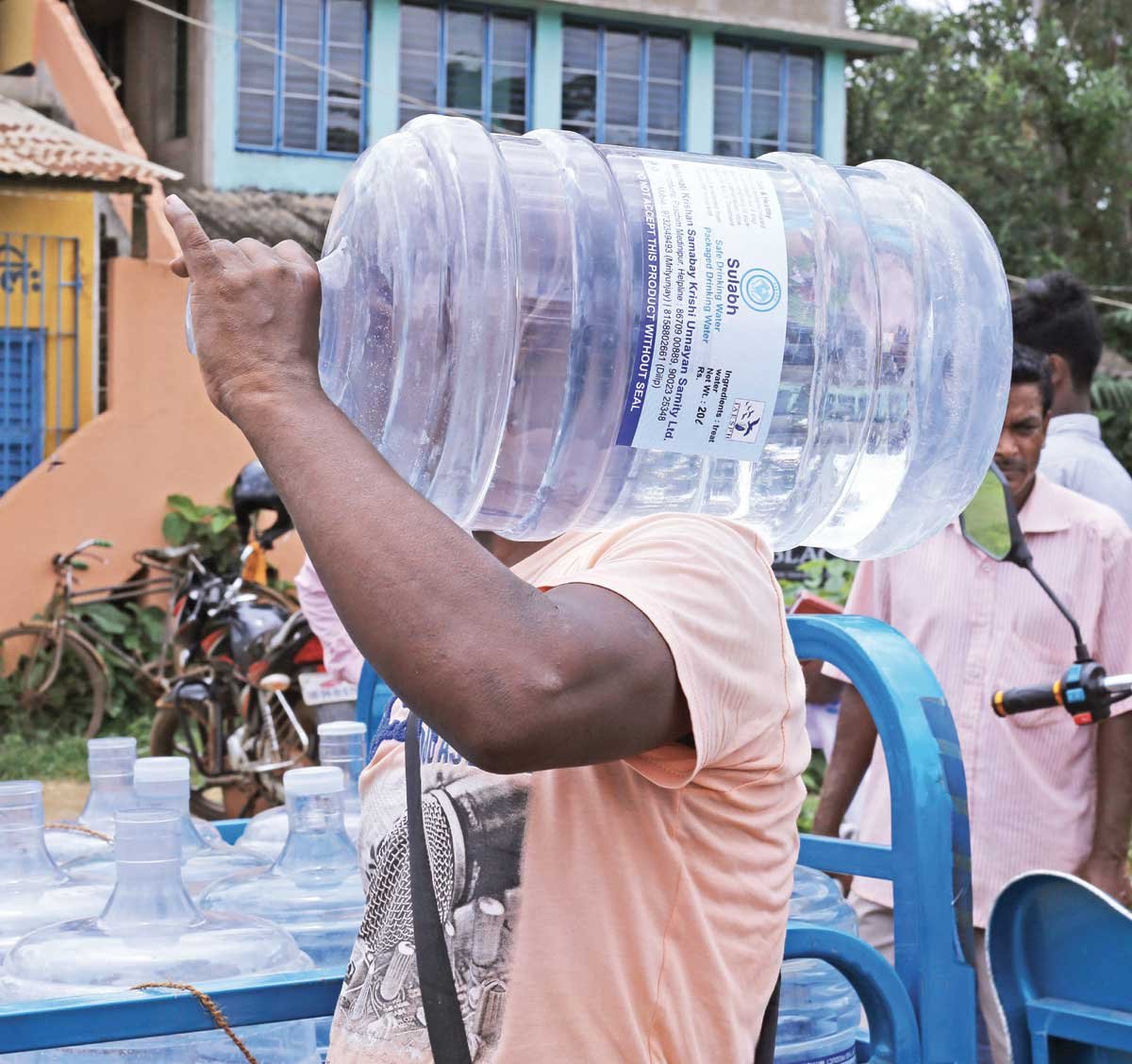
The Sulabh Purified Drinking Water is the latest initiative from Sulabh. Impure water from rivers, ponds, wells, water bodies and taps is purified by Sulabh technologies and becomes safe for human consumption. Sulabh is bottling this water, known as Sulabh Safe Drinking Water, which is available for INR 1 per litre.
There is a water vending machine that dispenses purified drinking water at the entrance of Sulabh Campus. The Water ATM model has been successfully replicated across multiple cities including New Delhi and Kanpur, bringing affordable safe water directly to communities.

Local people avail the facility of Sulabh Water ATM installed at Sulabh campus, New Delhi

Local people standing in queue waiting for their number to get Sulabh Drinking Water from ATM in New Delhi
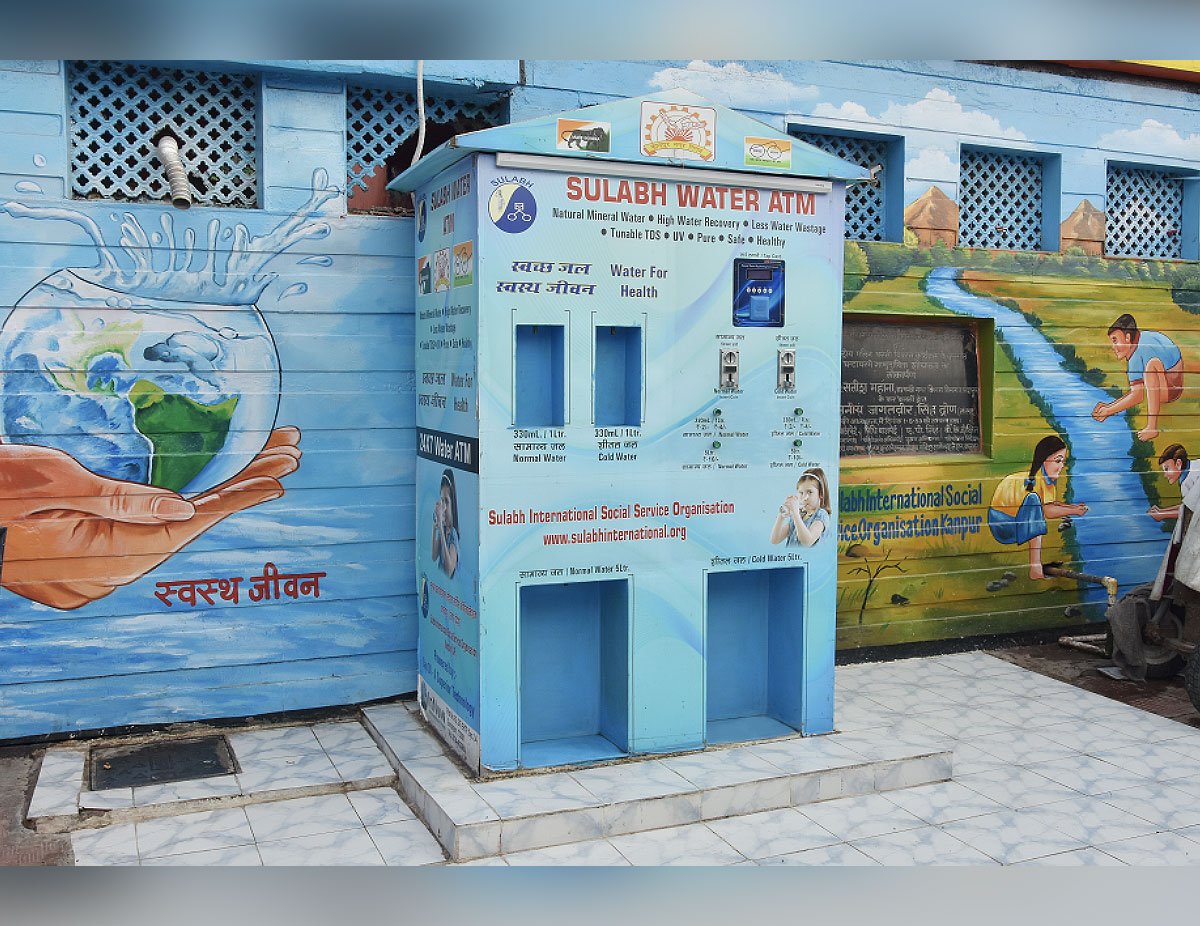
Sulabh Water ATM, Kanpur. Located at Ghantaghar ‘B’ Taxi Stand. Opened 12 January 2021. Capacity: 500 litres, purifies 70 litres per hour.
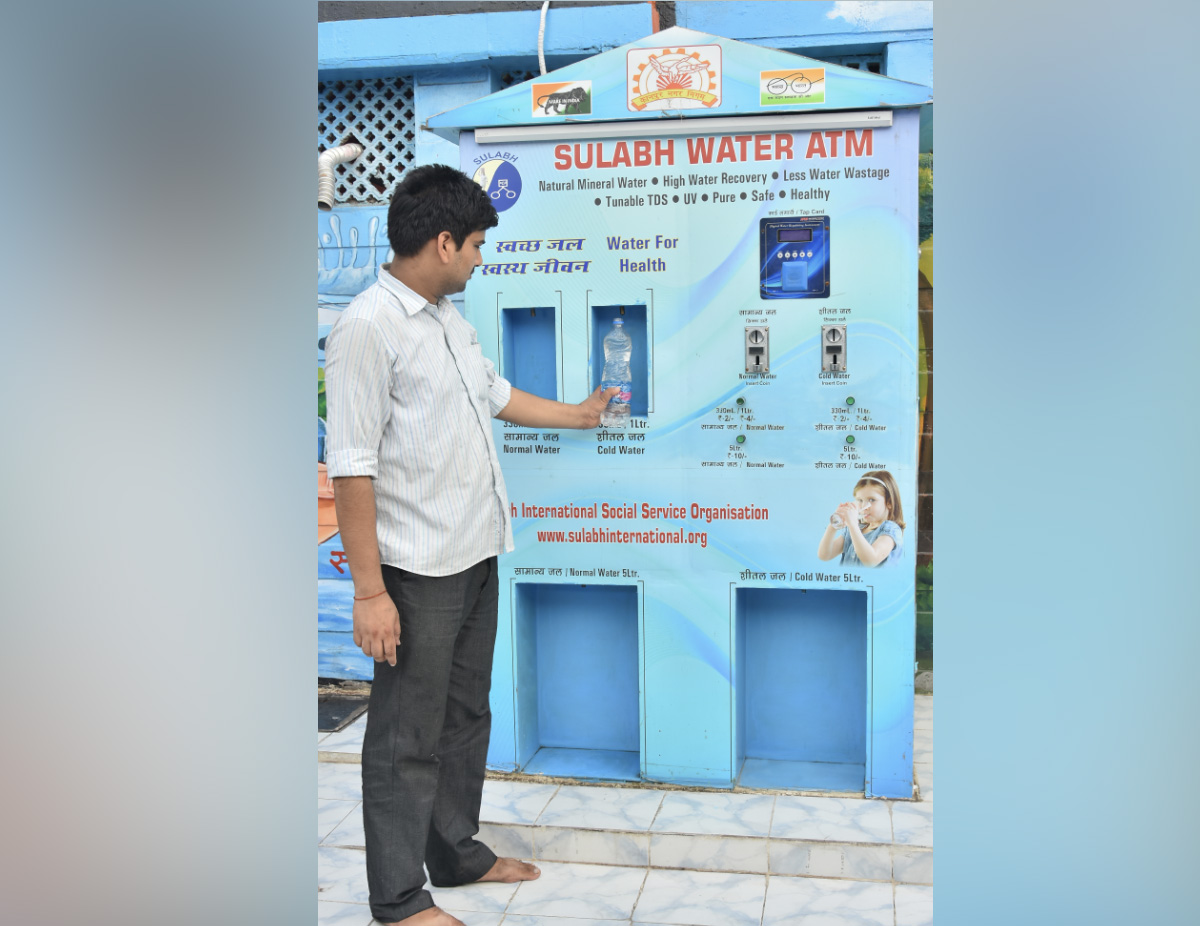
Sulabh Water ATM, Kanpur. Located right in the heart of the bustling city centre, serving hundreds of residents daily.
From designing community-managed water treatment plants in arsenic-affected villages to deploying Water ATMs in urban centres, Sulabh International’s water programme demonstrates that access to safe drinking water is not a luxury, it is a fundamental right. Through innovation, community engagement, and partnership, Sulabh is bringing SDG 6.1 to life across India.